Humanitarian Rescue Worker
What has given her the most pleasure has been the opportunities in Asia for humanitarian work, local and international:
- 2005 Sri Lanka Tsunami
- 2008 Chengdu earthquake – Trauma Relief Workshops in 2011
- 2013 Typhoon Haiyan/Tacloban Relief
for which she has received awards. Even her first posting in Hong Kong in the 80’s involved working in a government TB hospital with displaced Vietnamese boat people who arrived as refugees.

Tsunami Relief, Sri Lanka, 2005
Story, from The official publication of the Hong Kong Foreign Corespondent Club. (FCC)
“The Correspondent”, page 16, Jan/Feb 2005
https://issuu.com/fcchk/docs/200501-02
Dr Sue came on the journey to Sri Lanka and helped in administering vaccinations to local people. It was organized by local residents and lawyers, with the backing of the local health authority. This is her story…
Susan Jamieson
The three girls – myself, Kate Evans and Billie Gladwin, disembarked and collected our vaccinations in Colombo airport at midnight. We literally carried as much as three people could – loaded onto 6 trolleys. It wasn’t a typical holiday/backpacker scene there but rather desperate groups of anxious people with supplies: saffron robed Buddhist monks mingling with assorted westerners like ourselves, all picking up cardboard boxes full of aid from baggage. We were SO worried about having our kit confiscated by he government, like so many before us, however organization was impeccable. The Harrison family, residents of 22 years who had organized relief around their villa (7 km from Galle but unable to travel there until 3 days ago)had their local lawyer present at customs to smooth away problems. He was a charming man called Bindu Wickramasekara, director of the Galle based charity “Friends of the South”.
Arrived to their Villa in Illuketia at 4am, ready to vaccinate at 10am.
Vaccination progress in Sri Lanka
The past couple of days have been really intense! Having got off to a bad start at 10 am Wednesday, told by a Sri Lankan health official who was a ‘WHO consultant’ that the Government Health Authority did not approve of anyone on the Island being given hepatitis or typhoid vaccines, we were dispirited and confused (this had all been organized and approved of the prior week). However moving onto a neighboring village, we found that because of our local contacts, the health officer there was actually personally willing to assist us vaccinating. Many happy pictures were taken of both of us vaccinating babies!
Wednesday lunchtime, we linked with expatriate group ‘Project Galle’, led by Alex, a resident, and Maze, an Irish lady who had been on holiday. They are trying to set up a database in Galle through which relief group can co-ordinate their efforts. This had become necessary as it was realized that there was a Japanese team doing something in one area; A Danish group dropping off machinery for pumping wells in another; a roving Hungarian medical team and some French policemen wandering about! This also turned out to be an opportunity to vaccinate this group of about 30 spontaneously formed aid workers.
Myself, Nikki and Bob Harrison, their daughter Jennie who’d just flown in from University England and a charming Sri Lankan lawyer called Bindu Wickramasekara who was a director of the local charity ‘Friends of the South”, then moved to the previously trendy but particularly hard hit beach resort of Unawatuna.
Bindu had targeted this area as being one in which people were staying around the remaining pieces of their homes, reluctant to abandon their few remaining possessions to looters. No longer with running water, and the wells contaminated, disease appeared to be only a matter of time.
The scene was extraordinary : children scrabbling round in the rubble; washing hanging out on lines over the now defunct main Galle railway line, and a row of toilets which in a previous life had been attached to the back of the largest restaurant, now standing sentinel on the beach, each one with the doors missing!
2nd Day in Sri Lanka

In Unawatuna, just South of Galle, we came across a small clearing in the rubble in which sat a motley group of Sri Lankan and expatriate owners of now demolished hotels and bars, discussing priorities and action to be taken. Dirty, with assorted bruises and cuts around the feet from clearing debris, they found us a table on which to work, on the edge of the dirty road. We soon led an efficient vaccination processing line: Nikki took them out of packaging, Jennie removed air in the syringe and halved the dose for children, and Bob passed them to me with cotton wool and alcohol swab. There, Nikki received the great news that JP Morgan were sending a team of men with equipment to clean wells!
Looking for assistance in giving two vaccines to five hundred people, I asked the assembled group if anyone had any experience in giving intramuscular injections. A young Sri Lankan claimed he had done it in the army, then got scared and ran off! (These people were very traumatized!) I was rescued by a lovely but rather tired looking man called Reto Cloetta, owner of the now non existent Neptune Bay Hotel. We were finished by dark.
Rather exhausted but wired up, I stayed up till midnight, chatting to assorted guests staying at the very glamorous and beautiful ‘Villa Illuketia’ run by the Harrisons. This, well back from the beach, had been the temporary refuge of numerous Tsunami victims, including the family of Kate Evans, who had asked what was the most needed in the area that wasn’t provided, and had been told ‘vaccines’.
There were still temporary residents there, including the famous opera singer Barbara Segal, and also Fortune journalist Eric Ellis. They owned property in the area, and were motivated to help in any way possible.
The next morning ‘the team’ finished off with the Unawatuna village in the morning. We then moved to an area near Martara, 30km South. The talk in the landrover was of the President’s decree that no new or rebuilding could take place 350 meters from the beach. How extraordinary! How were people going to rebuild their homes? To make matters worse, planning permission had been switched from local to Central government, a move that might cost (people who had lost everything) more, and would definitely take longer.
An hour and a half later we reached our destination: Medihah Temple Village. These people had raced in a panic from the beaches to the hills and the temples which were well organized by the Buddhist monks. These were called ‘camps’ and were noticeably more calm and orderly.
As usual, every twenty minutes I’d be approached by someone wanting medical advice. This was inevitably a foot injury from clearing rubble and requiring antibiotic treatment.
At this one, the JVP, local communist coalition party were assisting us. I persuaded the young, tall JVP officer, affecting a Che Guevera look, to help take vaccinations out of the boxes!
Interestingly, in all the time I was there and the places I visited, I never saw one medical aid worker from any group, which I couldn’t understand. I decided that perhaps they were at a local hospital.
That night, people were rather tried and frayed at the edges. After a few drinks, dinner was served at 9 -10pm, as is common in most hot countries, A fitting end to another intense and draining day, there were a few dramas and tears shed around the dining table.
The next morning we only just managed to get the landrover up a boulder strewn path leading to a couple of ‘temple villages’ in the only hill in Galle called Roomasala. Luckily, Bob had done a 4-wheel drive course! A lot of people had taken their children and ran up this hill when the waves hit, so there were many displaced families. This hill was famous for having some wonderfully healing Ayurvedic herbs, which couldn’t be found anywhere else in Sri Lanka. According to myth, when one of the Gods needed some special plants in a hurry, he simply scooped up the earth and placed in a different country.
The incredibly sweet, very ascetic looking monks insisted on serving me tea with Jacob’s cream crackers. We were on such a tight schedule, not having had a tea or lunch break in three days – however it meant so much to them I decided to make the time.
Friday lunchtime, time to leave. Bindu had rushed off, expecting a large shipment of paint and building material to come in from the UK. He’d just heard that the government have an embargo on any foreign aids entering Colombo airport, unless accompanied by official letter from at least two Sri Lankan authorities. He was presently trying to get audience with an official in order to get one signed quickly.
This time in the afternoon, traffic was terrible the journey to Colombo took four hours.
Time, however, to absorb the coastal damage; the most surreal being rows of ships sitting on land, at various angles on their keels, besides the road and railway. Also, Galle cricket ground was covered in rubbish, with a small yacht in the middle.
Over ten thousand people had been killed (within a 2-mile radius) of Galle.
When I got to Colombo, it was with a sense of relief at being back in normality.
Chengdu earthquake relief

In cooperation with the local government of Chengdu, Dr Jamieson presented three trauma relief workshops.
Three years after the Earthquake, local people who had watched their children being crushed under collapsed schools, had had no outlet for their grief and anger, to the extent that women were suffering from unexplained infertility.
The epicentre of the earthquake was 3 hours drive from Chengdu, and the beautiful holistic Magnolia Retreat centre hosted this venture. The workshops were part of the Florasics Holo-Health World Conference 2011. A fourth workshop was presented by Dr Jamieson’s associate Claire McLetchie.
The Conference was held in the beautiful Magnolia Retreat at the Beichuan Medicine King Resort, Sichuan, China from Monday 14th March -> Friday 18th March 2011
Our sense of smell is the gift to come to us when we are born. As one of our senses, the healing potential of the power of smell is undervalued. Since ancient times, essential oils made from plants have been known to have special healing affects. These workshops are tailor made around the essence of Magnolia.
As a doctor, bridging science and ancient healing techniques, Dr. Jamieson specialises in combinations which balance, relax and heal both mind and body by using movement, scent, art and writing. Together, the body and emotions can be rebalanced to a state of ‘original innocence’ – a time when there were no traumas or worries.

The True Potential of The Magnolia – Break through Frustrations and Worry
Discussion on the healing aspect of Magnolia, through movement exercise under Magnolia trees, to connect with nature.
Freestyle Movement in Nature Participation (with background music). Release worries and frustrations through movement.
Workshop 2
Connect To Your Inner Essence and Blossom Out
Comparisons of the growing and blossoming of beautiful Magnolia flowers and how this relates to our life. We will do this through our group singing and writing about the feelings and experiences we receive when connecting to the essence of the Magnolia.
Workshop 3
Connect To The Heart Colour Through Magnolia
Creativity is explored and encouraged as we connect to the essence of the Magnolia flower through art and colour.
Workshop 4 The Gift of The Essence of Magnolia (this workshop is led by Claire McLetchie) The healing essence of Magnolia aids with stabilisation of the mind and body and protection in general. This workshop explores how we can use these attributes to help in every day life.
The workshop includes guided closed eye meditation to aid in accessing one’s own true nature.
Claire will also provide examples of how to protect ones self and communicate in a loving and respectful manner by connecting to the essence of the Magnolia.
Responding to typhoon Haiyan in the Philippines
Typhoon Haiyan in 2013, also known as Super Typhoon Yolanda in the Philippines, ranked as one of the strongest tropical cyclones ever recorded. It was stronger than Katrina and Sandy combined, and the scramble to respond with essential medicines was challenging.
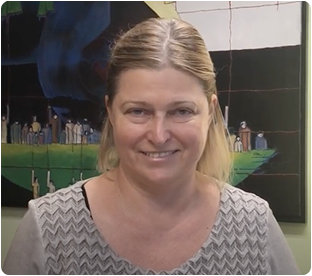
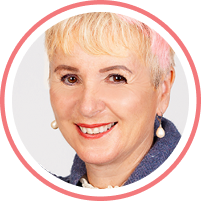
Dr. Susan Jamieson in Tacloban
For two days, Dr. Susan worked tirelessly to gather half a million dollars worth of vaccines and antibiotics to get them into Tacloban City. At that time, the devastation was immense, with an estimated 5,000 dead and 2,000 missing. Finally, Olive Luces (chief of NDRRMC, the National Disaster Risk Reduction Management Council Manila) and Buddy Estudillo (head of CDRRMC – City Disaster Risk Reduction Management Council Tacloban) arranged for her transport from Manila to Tacloban via military flights. From the airport, she was then taken directly to the Town Hall to establish a clinic in the heart of the disaster-stricken city. This was a critical, life-saving mission, as infectious diseases posed a significant threat, potentially claiming more lives than the initial trauma. While wounds needed immediate triage, the risks of diarrhea and other illnesses due to lack of sanitation and clean water were also severe. Given that vaccines take two weeks to become effective, prompt administration was crucial. Individual volunteers like Dr. Susan were often able to mobilize more rapidly than large aid organizations.

Philippine Disaster Medical Aid
TACLOBAN
“Well, we could get you on a military flight there,” Celeste said. “Getting you back is the problem, as the locals are queuing for days. Even my relatives are trying to get out, as they’re sick of the smell of dead bodies.”
Crazy? I’m in a devastated city of a quarter million people, staying in a home with no electricity or running water, canned food only, and all the criminals are running free because the prisons have also been torn to shreds by typhoon Haiyan. I’m frankly scared. I may be resourceful, but my only training is medical.
I’m wondering what on Earth made me decide to take this trip on. No one forced me. I saw an opportunity and took it. I knew I could do it.


Tuesday November 13
My trip to Tacloban on Sunday November 19 had been prompted by meeting my downstairs Filipina neighbour Celeste for the first time on Tuesday night. Over a commiserating glass of wine, she told me that her father’s job before the disaster in her homeland had been chief of traffic and also disaster risk management.
According to her Dad – Buddy Estudillo – there was no medical aid at that time.
Previous experience
This scenario reminded me of my Sri Lankan experience, when locals invited me to vaccinate against water-borne disease in the first week after the Tsunami. http://lightdoctor.net/charity/tacloban-typhoon-relief. I explained that in these situations more people could die of infectious disease such as hepatitis. That because of lack of clean drinking water and also no hand washing after going to the toilet, these diseases could be the last straw for a stressed undernourished body. Also, in that week I didn’t see another aid worker. Their vehicles and aid had been impounded by the Sri Lankan government or stolen, and so they were paralyzed. Somehow it had been simpler for someone like me, with the support of locals in the ground, to do some good work.
Hearing first hand of the trials and tribulations of these people with nothing left meant more than watching news footage. There and then I decided to go to give aid personally. My advantage is that I’m not a large aid agency with layers of bureaucracy and protocols. I decide a plan, then make it happen (and I pray a lot!).
Logistics
Celeste, her Dad and I made a plan over the next two days. It wasn’t easy due to communication problems and intermittent mobile reception, but we soon had a plan. Buddy said people had received tetanus vaccine, however water was a problem and they were worried about people contracting a fatal disease called leptospirosis, contracted from rats, which were already beginning to overrun the place.
Having experience of this, I know that to medicate and vaccinate thousands there are two main problems – vaccines can’t be out of the fridge for long, and because there are many boxes it’s too much to carry.
Wednesday, November 14
Nick Thompson, friend and local pilot, walked into my Hong Kong medical office. “My plane’s co-owner and I have come up with an idea of us flying the plane from Penang, to Tacloban. We can take aid. Or, if you can get in yourself, with our small plane we can pick you up. We are applying for flight plan permission.”
Now things were falling into place. I knew, that one way or the other I was going.
Thursday, November 15
I put in an order to Glaxo for Hepatitis A vaccine and antibiotics. I paid for them personally – no time to raise funds here. Vaccines take two weeks to work, so vaccinations need to be done now.
Unbelievably, even though I have been a customer for over 20 years, paying around half a million dollars for medications to be given to charity, their Zeleug distributor told us ”they were too busy stocktaking and the warehouse was closed”. Mike Saunders, my practice manager, took over. After lengthy discussions there was a promise of Saturday morning delivery to my office.
The rest of the day was spent preparing dressings, creams, eye drops, and other aid.
Endless Philippine department of health drug import and ”Deed of Donation” forms are filled out by my nurse and Mike.
No air space permission was forthcoming and vague promises of seats on a US military C109 from Manila to Tacloban.
We paid for tickets to fly at 830am Sunday to Manila.
Friday, November 16
The distributor tells us they don’t want to deliver the required antibiotics. Stocktaking again reared its ugly head. I was beginning to feel like a Greek hero who had to overcome one battle after the other. I can’t believe it – this is my business and the only thing I can be really confident of, and it’s proving the hardest. However, others came to my aid. A local medical practice donated them to us on Friday afternoon. We plan for eight people to be in the practice Saturday morning to take vaccines out of boxes and put in the fridge overnight. Then Nick and Mike would be in the office at 5am Sunday to repack them with cold blocks and meet me at the airport.
Saturday, November 17
We all wait, and wait all day. No one anywhere available on the phone. Everyone is panicked, however there’s nothing I can do aside from being calm, and praying. At 5 pm I get a call. Apologies… and the vaccines are delivered at 7pm, when there are only three of us left in the office. Saturday night plans change quickly for my staff and friends.

Sunday morning, November 18
By now, I’m firmly in Greek hero mode. In a Medusa-like way, I note that after I’ve cut one monster’s head off another immediately arises. I travel from home (in the country) to the airport every six weeks or so, and have done so without problem for years. This is Sunday at 5am and I can’t call for a taxi as my home phone is suddenly not working; can’t use my mobile as it’s been switched to satellite and will only work in the Philippines. There are no passing taxis and I wonder if I am going to be the one to sabotage this trip by not turning up to the flight.From here on in every delay becomes stressful as I know that we can’t allow these vaccines to warm up. I wake up a neighbour and get help.
Sunday afternoon
From experience, I know how difficult customs can be with medication. Luckily, we have been invited by the head of Tacloban risk management, and clutch a letter inviting us. Big sigh of relief.
US Marines
We now get a taxi to the US Villamura air base where we’ve been assured the ”help desk” will get us on a flight, as they have our name on a priority list. Of course, it turns out there is no help desk and no one in this US Marine dominated area have heard of us. There are very few flights going out that day, as the Phillippine president is visiting Tacloban, and the airport has been closed! Nick’s and my stress starts to build again. In this small lounge there are three Spanish firefighters who have been waiting since 2 am to get on a flight so they can install water filtration equipment plus two journalists.

We again show our Holy Grail letter. A rugged US Delta force general interviews me about my activities and assesses us. Nick is ex-army (SAS), and said (I thought rather tactfully) to me on arrival, “Best leave it to us moustache-types to sort this out Susan”.
So I left it to him gleaning information from the journalists who had already been there. Nick and I both thought it strange that there weren’t any medical aid people in this lounge. Seems like it was true what Buddy said about lack of aid.
The American attaché stepped in, saying that Philippine-organized aid had to get priority. Before we knew it we were on the next flight, squatting on the floor of the plane with a lot of bags of canned food and a WHO lady who was going go to Tacloban to ”assess the situation”.
the light doctor
Voices of Trust
and Success
Discover how real experiences and testimonials make a difference. See how our customers have achieved success and why they trust us!
Letters of recommendation for Dr Jamieson